Board · Machine
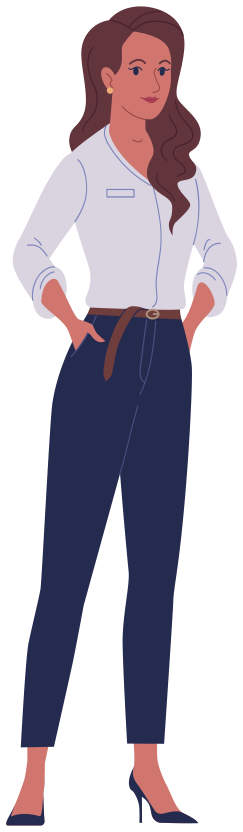
Anna
Chief executive
No photographic counterpart
control · numbers · distance
Runs the company the way she runs a spreadsheet: everything counted and on time. Orderly to a fault, tough in conversation, unshakeable: afraid of neither decisions nor people. Driven by influence, order and position. Reads people poorly: she sees facts, not states; she treats an evaluation as data and cannot see why anyone would dwell on a sentence that was neutral to her. Grew up in a Polish family business and turned it into a corporation: the boss decides, people speak plainly (by Polish standards), and trust is earned with results.
Character
tried and testednew things
easy-goingorderly
inwardoutward
toughsoft
calmtense
What drives them
influence · order · position
Reading people
poor: sees facts, not states
Where from and how they talk
Poland · the boss decides · speaks plainly · trust earned by results
Position vs character
The position fits the temperament. The cost: she cannot see how her sentences land two floors down.
Operations · Workshop inside a machine
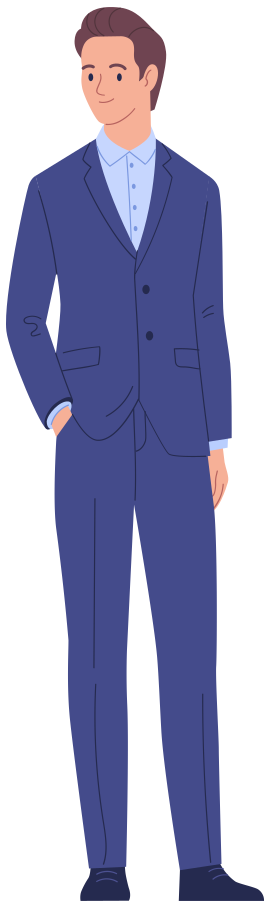
Samuel
Chief operating officer
Reports to: AnnaNo photographic counterpart
vision · out loud · warmth
Discovers what he thinks by saying it. A head full of new ideas and to-do lists lost somewhere along the way; he draws energy from people, is warm and unshakeable. Driven by curiosity, people and a sense of purpose. Reads people moderately: senses a room brilliantly, the effects of his own words poorly. Grew up in Lagos, studied in London: from home he brought respect for hierarchy and speaking between the lines; he trusts people he knows and treats time flexibly.
Character
tried and testednew things
easy-goingorderly
inwardoutward
toughsoft
calmtense
What drives them
curiosity · people · purpose
Reading people
moderate: senses a room, not the effect of his own words
Where from and how they talk
Nigeria / United Kingdom · the boss decides · between the lines · trusts people he knows
Position vs character
A mismatch: an ideas person in a job made of procedures, between a CEO who wants numbers and teams that take his loose thoughts for orders.
Sales and clients · Race
Zofia
Head of sales
Reports to: SamuelNo photographic counterpart
pace · target · loud
Talks fast, decides faster. Full of energy, orderly, tough in conversation; she turns tension into motion. Driven by winning, position and pace. Reads people so-so: understands clients, not quiet people; takes silence for disengagement. Polish, but speaks more plainly than most Poles, goes head-on in a disagreement, and a deadline is a deadline.
Character
tried and testednew things
easy-goingorderly
inwardoutward
toughsoft
calmtense
What drives them
winning · position · pace
Reading people
so-so: understands clients, not quiet people
Where from and how they talk
Poland · speaks plainly · head-on in disagreement · a deadline is a deadline
Position vs character
The position fits. The cost: the team adapts to her pace or disappears from her field of view.
Sales and clients · Race
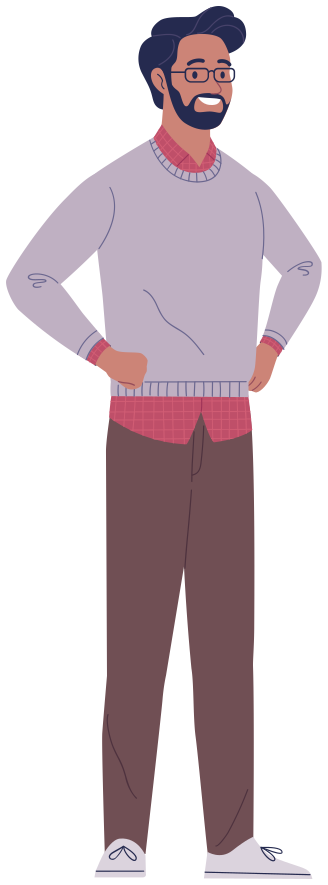
Marek
Senior key account manager
Reports to: ZofiaPhotographic counterpart
results · pressure · specifics
Delivers the numbers and carries the tension in his shoulders. Orderly, tense, tough in conversation, wary of anything new: proven methods, proven people. Driven by position, security and order. Reads people poorly, because he sees other people’s intentions through the lens of threat. A Pole with a head full of hierarchy: never argues upward, explodes downward, usually on the phone.
Character
tried and testednew things
easy-goingorderly
inwardoutward
toughsoft
calmtense
What drives them
position · security · order
Reading people
poor: sees other people’s intentions as threats
Where from and how they talk
Poland · never argues upward · plain-spoken downward · a deadline is a deadline
Position vs character
A good salesman who wants to lead. He competes with Zofia for the same chair and the same right to speak.
Sales and clients · Race
Nia
Customer success specialist
Reports to: ZofiaNo photographic counterpart
relationships · direct · attentive
Asks directly and listens to the end. Warm and soft in conversation, open to people and to new things, unshakeable. Driven by people, acceptance and purpose. Reads people well: sees a client’s and a colleague’s perspective equally clearly. American, from Chicago: asks directly and declines without offence, treats the boss as a colleague, and starts trust with the task and quickly moves it to the relationship.
Character
tried and testednew things
easy-goingorderly
inwardoutward
toughsoft
calmtense
What drives them
people · acceptance · purpose
Reading people
good: sees a client’s and a colleague’s perspective
Where from and how they talk
USA · speaks plainly · the boss is a colleague · trust by results, then by knowing you
Position vs character
The role fits. A mismatch with the race in Zofia’s team: the quarter’s target and the client’s good do not always go together, and she absorbs the difference.
Product and design · Family
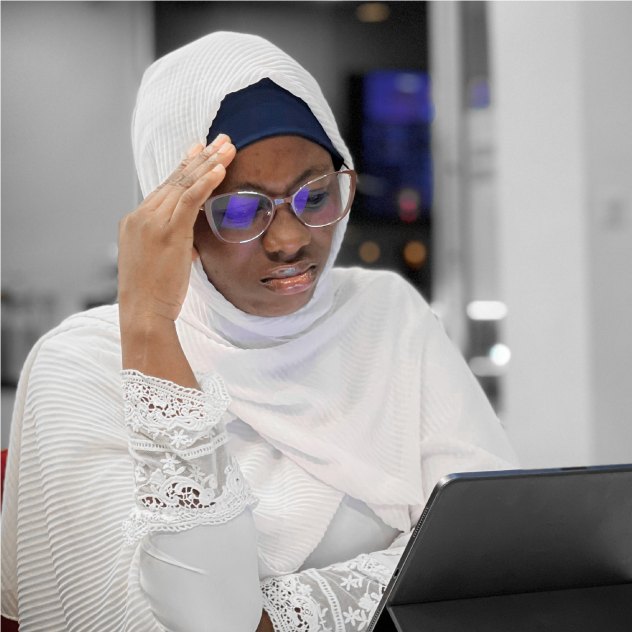
Helena
Head of product
Reports to: SamuelPhotographic counterpart
care · hint · patience
Builds the team with tea and “how are you feeling”. Soft, orderly, quiet, sometimes tense. Driven by caring for others, peace and a good name. Reads people well, but knows what others feel and does not say what she wants herself. Polish: speaks between the lines, wraps criticism in courtesy, trusts people she knows, and values consensus over pace.
Character
tried and testednew things
easy-goingorderly
inwardoutward
toughsoft
calmtense
What drives them
care · peace · a good name
Reading people
good: knows what others feel, does not say what she wants
Where from and how they talk
Poland · between the lines · criticism wrapped · trusts people she knows
Position vs character
A partial fit: she leads people well and decisions less well. Her requests get lost on literal listeners, and her “maybe sometime” is, to her, an order for today.
Product and design · Family
Amira
Product designer
Reports to: HelenaPhotographic counterpart
precision · plan · decision
Speaks when she has finished thinking and treats spoken words as decisions. Orderly to a fault, quiet, open to new forms but not to chaos. Driven by order, curiosity and independence. Reads people moderately: understands users better than colleagues. From Cairo, studied in Warsaw: at home people speak between the lines; at work she deliberately chose to speak plainly, to survive between two worlds; the boss’s words are orders to her.
Character
tried and testednew things
easy-goingorderly
inwardoutward
toughsoft
calmtense
What drives them
order · curiosity · independence
Reading people
moderate: understands users better than colleagues
Where from and how they talk
Egypt / Poland · the boss decides · plain-spoken by choice · a deadline is a deadline
Position vs character
The position fits. She needs explicit decisions; Samuel’s loose thoughts become forty screens of mockups.
Product and design · Family
Maja
UX writer
Reports to: HelenaPhotographic counterpart
words · sensitivity · tone
Hears the tone before she hears the content. Soft, sensitive, tense, quiet, open to new things. Driven by acceptance, purpose and peace. Reads people well, sometimes too well: she adds intentions where there were none. Polish: speaks between the lines, avoids disagreement, wraps criticism in three paragraphs so as not to hurt anyone.
Character
tried and testednew things
easy-goingorderly
inwardoutward
toughsoft
calmtense
What drives them
acceptance · purpose · peace
Reading people
good, sometimes too good: adds intentions
Where from and how they talk
Poland · between the lines · criticism wrapped · avoids disagreement
Position vs character
The role fits perfectly. A mismatch with direct people: she carries one of Jonas’s sentences around for a week.
Product and design · Family
Tomasz
Product analyst
Reports to: HelenaPhotographic counterpart
literal · data · calm
Words mean to him exactly what they mean. Orderly, unshakeable, quiet, neither tough nor soft in conversation. Driven by order, independence and curiosity. Reads people poorly, not out of ill will but out of literalness: he does not pick up hints because he does not see them. A Pole who by nature speaks and hears plainly; he takes politeness as content, not as tone.
Character
tried and testednew things
easy-goingorderly
inwardoutward
toughsoft
calmtense
What drives them
order · independence · curiosity
Reading people
poor: does not see hints
Where from and how they talk
Poland · hears plainly, by nature · a deadline is a deadline
Position vs character
Excellent at analysis, loses to hints. He takes “when you have a minute” literally and is honestly surprised by the grievance.
Delivery and support · Workshop versus machine
Karim
Delivery lead
Reports to: SamuelPhotographic counterpart
ease · people · improvisation
Brings pastries and solves problems in corridor conversations. Soft, sociable, open to new things, easy-going with plans and unshakeable. Driven by people, a shared table and independence. Reads people well: knows who needs what before they say it. Moroccan, from Lyon: speaks between the lines, trusts people he knows, treats time flexibly and the boss as a colleague.
Character
tried and testednew things
easy-goingorderly
inwardoutward
toughsoft
calmtense
What drives them
people · a shared table · independence
Reading people
good: knows who needs what before they say it
Where from and how they talk
Morocco / France · between the lines · trusts people he knows · flexible time
Position vs character
A mismatch: an improviser leading a team that lives on procedures and deadlines. The team likes him; the processes do not.
Delivery and support · Workshop versus machine
Jonas
Implementation engineer
Reports to: KarimPhotographic counterpart
direct · structure · quality
Says “this doesn’t work” and considers it a compliment to the listener. Orderly, unshakeable, tough in conversation, neither quiet nor loud in company. Driven by order, rules (they exist to be followed) and independence. Reads people so-so: understands arguments, not tones. Dutch, from Rotterdam: delivers criticism plainly, treats the boss as a colleague, sees disagreement as normal work, and a deadline is a deadline.
Character
tried and testednew things
easy-goingorderly
inwardoutward
toughsoft
calmtense
What drives them
order · rules · independence
Reading people
so-so: understands arguments, not tones
Where from and how they talk
Netherlands · criticism plainly · the boss is a colleague · disagreement is work
Position vs character
Technically a perfect fit. His honesty sounds like an attack in Poland, and Polish softness sounds to him like having no opinion.
Delivery and support · Workshop versus machine
Olek
Front-end developer
Reports to: KarimPhotographic counterpart
energy · idea · tomorrow
Three ideas a minute and no deadline in the calendar. A head full of new things, easy-going with plans, sociable, soft, sometimes tense. Driven by curiosity, motion and independence. Reads people moderately: understands them when he stops, and he rarely stops; in conflict he goes quiet so as not to say something he will regret. A Pole from Generation Z: speaks plainly, treats the boss as a colleague, time flexibly, and “why?” is a question to him, not rebellion.
Character
tried and testednew things
easy-goingorderly
inwardoutward
toughsoft
calmtense
What drives them
curiosity · motion · independence
Reading people
moderate: understands people when he stops
Where from and how they talk
Poland (Gen Z) · speaks plainly · the boss is a colleague · flexible time
Position vs character
A creative fit. Plans and deadlines hurt him, which makes conversations with Amira hard and with Karim too easy.